
Why does creativity matter in assisted living?
Creative activities support more than entertainment. For older adults in assisted living, art, music, writing, movement, gardening, and hands-on projects can encourage self-expression, social connection, confidence, and a sense of purpose.
Creativity also gives residents choices. A person may not be able to participate in every physical or social activity, but may still enjoy selecting colors, recalling a favorite song, arranging flowers, shaping clay, or sharing stories from earlier years. These experiences help preserve identity beyond a diagnosis, mobility limitation, or need for daily support.
Creative programs can also provide structure. A regular afternoon art group or music session may give residents something familiar to anticipate, especially during periods of transition or changing routines.
What types of creative activities work well for older adults?
The most successful activities are adaptable, familiar, and open-ended. Residents should be able to participate at different ability levels without feeling tested or judged.
Useful options include:
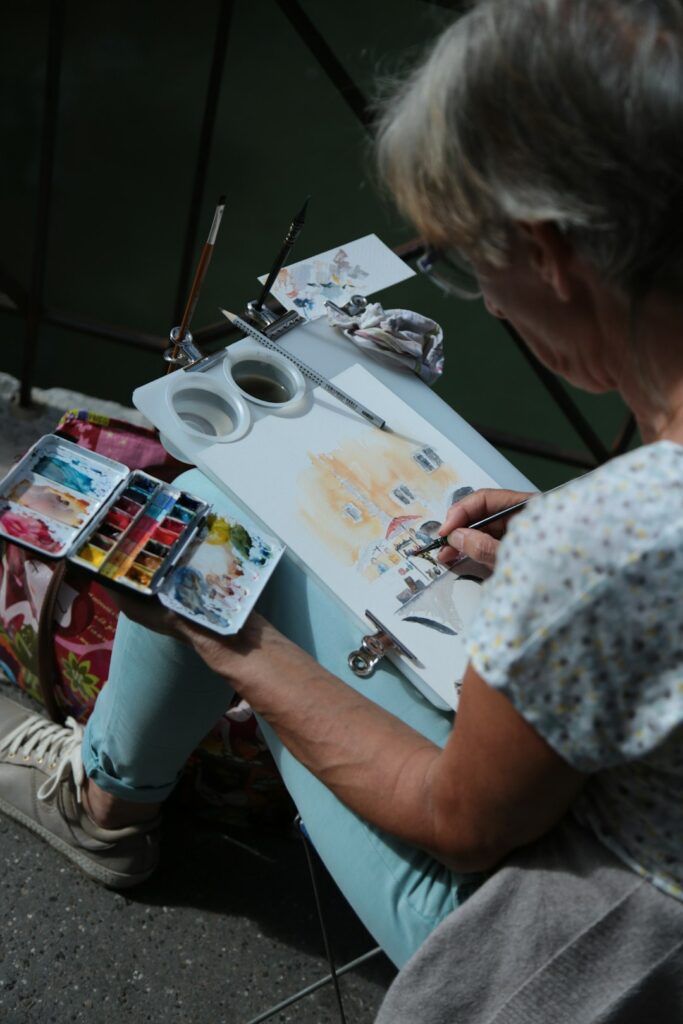
- Watercolor painting, colored pencils, collage, and simple printmaking
- Large-piece puzzles, scrapbook pages, and memory boards
- Singing, rhythm instruments, music listening, and lyric-based discussions
- Poetry, journaling, storytelling, and recording family memories
- Flower arranging, container gardening, and seasonal nature projects
- Knitting, weaving, sewing, paper folding, and other tactile crafts
- Cooking demonstrations, recipe-sharing, and decorating simple foods
- Gentle dance, chair movement, or movement set to familiar music
- Photography, viewing personal pictures, and discussing meaningful places
- Building displays connected to seasons, holidays, or local traditions
A finished product is not required. The process of choosing, experimenting, remembering, and communicating may be more valuable than producing something that looks polished.
How can activities be adapted for different abilities?
Creative programs should be adjusted to the person rather than expecting every resident to use the same materials in the same way. A resident with arthritis may enjoy painting with a wide-handled brush, while someone with limited vision may prefer textured materials, music, or storytelling.
Helpful adaptations include:
- Using large, easy-to-grip tools
- Offering non-toxic, washable, and low-odor materials
- Securing paper or fabric to the table so it does not slide
- Providing pre-cut shapes and partially completed projects
- Using high-contrast colors and clear labels
- Giving verbal descriptions of materials and steps
- Allowing extra time without rushing
- Offering seated options for activities that involve movement
- Reducing background noise during conversations or instruction
- Presenting one or two choices at a time rather than an overwhelming selection
Residents living with memory loss may respond well to familiar songs, repetitive motions, seasonal objects, and activities connected to earlier interests. Instructions should be brief and encouraging. Correcting a person’s technique or memory is usually less helpful than acknowledging the emotion and effort behind the activity.
How can families support creativity during visits?
Families can make visits more meaningful by participating in an activity instead of relying only on conversation. A shared project may reduce pressure for a resident who has difficulty finding words or following a long discussion.
Family members might bring copies of photographs, a favorite recipe, fabric samples, postcards, or music that has personal significance. These items can prompt stories and help staff understand the resident’s preferences. Before bringing materials, families should check any community rules involving food, scents, storage, allergies, or shared equipment.
Useful conversation starters include:
- “What colors would you like to use?”
- “Does this song remind you of a particular time?”
- “Would you rather work on this now or later?”
- “Tell me about something you used to make.”
- “What part of this project feels most interesting?”
The goal is companionship, not performance. Praise should focus on participation and personal meaning rather than artistic quality.
What should assisted living staff consider when planning creative programs?
Programs are more inclusive when they account for energy levels, transportation within the building, hearing and vision needs, cultural traditions, and residents’ previous experiences. A morning activity may work well for one group, while another may be more alert after lunch.
Scheduling should also leave room for residents who need additional time to arrive, settle in, or receive assistance. A program held in a well-lit, uncluttered area can be easier to access, particularly during winter months when outdoor conditions may be cold, wet, or icy.
Staff should learn whether residents have enjoyed creative work before. Someone who never considered themselves an artist may still enjoy music, mechanical projects, gardening, decorating, or oral history. Creativity is broader than drawing and painting.

A balanced calendar may include both group and individual opportunities. Group activities encourage social connection, while quiet projects allow residents who prefer less stimulation to participate comfortably.
Can creativity help with loneliness or changes in mood?
Creative activities can support connection, but they are not a substitute for assessment or treatment when a resident has ongoing sadness, anxiety, withdrawal, confusion, or loss of interest. A noticeable change in mood should be shared with the resident’s care team.
Within ordinary daily life, creative work may make social interaction easier. Residents can talk while sorting photographs, singing, folding paper, or tending plants. This creates a shared focus and may feel less demanding than a face-to-face conversation.
Music can be especially useful because familiar melodies may remain accessible even when other memories are harder to retrieve. Residents may enjoy listening, humming, tapping, or simply being present while others sing.
How can creativity remain personal rather than generic?
Personalization is the key. Two residents may attend the same activity but have completely different reasons for enjoying it. One may value bright colors, another may prefer precise patterns, and another may care most about sharing memories with a group.
A simple preference profile can include:
- Favorite music and performers
- Past hobbies, occupations, or practical skills
- Preferred colors, textures, scents, and materials
- Cultural, religious, or seasonal traditions
- Activities the resident dislikes or finds frustrating
- Whether the resident prefers groups, one-to-one interaction, or quiet time
Projects can also reflect the seasons experienced in the local community. Indoor creative activities may be especially useful during colder periods, while safe outdoor options such as container gardening or nature observation can be offered during milder weather. The activity should remain flexible rather than tied to a rigid schedule.
What are common mistakes to avoid?
Creativity becomes less enjoyable when activities are treated like school assignments or tests. Common problems include choosing projects that are too complicated, assuming every resident wants to make the same item, or focusing heavily on the finished product.
Other concerns include:
- Using materials that are difficult to grip or see
- Giving lengthy instructions all at once
- Correcting residents unnecessarily
- Treating refusal as noncompliance rather than a preference
- Scheduling activities without enough time for rest
- Ignoring noise, lighting, temperature, or room layout
- Offering only traditional “crafts” instead of varied forms of expression
A resident who declines one activity may still enjoy another. Choice, dignity, and flexibility should remain central.
How can creativity become part of everyday assisted living?
Creative expression does not need to be limited to a formal activity calendar. Residents can help choose dining-room music, arrange a seasonal display, select colors for a common area, share a family recipe, or tell stories during a small gathering.
Even brief moments can be meaningful: decorating a card, watering a plant, listening to a familiar song, or discussing a photograph. These activities recognize that older adults continue to have preferences, knowledge, imagination, and personal stories.
The strongest creative support is consistent, adaptable, and connected to the individual. In assisted living, creativity is not an extra reserved for residents who consider themselves artistic. It is a practical way to support identity, choice, communication, and belonging.
